
Automation systems for owner-run businesses

Revenue shouldn’t disappear in the gaps.

A missed call. An untouched lead. A quote nobody followed up. Eleven88 builds the systems that catch those moments, decide what happens next, and report what happened.

Free Revenue Leak Audit  /  For salons, clinics, home services, trades and other owner-run businesses.

TUESDAY · 8 AM – 10 PMHANDLED 0 / 5HANDLED 1 / 5HANDLED 2 / 5HANDLED 3 / 5HANDLED 4 / 5HANDLED 5 / 5WITHOUT A SYSTEMWITH ELEVEN8881012246810LEADweb form, no replyREPLIEDrecordedQUOTEfollow-up dueFOLLOWED UPrecordedCANCELempty slotSLOT OFFEREDrecordedINVOICEoverdue, not chasedREMINDEDrecordedENQUIRYafter-hours messageANSWEREDrecorded▨ no next action■ handled and recorded
The same day, with and without a systemIllustration

Most businesses don’t have a lead problem. They have a handoff problem.

The enquiry arrives. The team gets busy. The follow-up happens tomorrow, and sometimes tomorrow is already too late. We build the systems in between.

01 / SIGNAL

A call comes in at 9:42 pm.

The office is closed. The owner is home. This happens every week.

02 / THE GAP

Without a system, it ends at voicemail.

No next action is scheduled and nothing is recorded. The caller tries someone else.

03 / THE ROUTE

With one, the call is handled.

The caller is identified, the need captured, availability checked and the booking made.

04 / THE RECORD

And it’s written down.

So you can see what the system handled, instead of guessing what you missed.

Step 1 of 4. Click a step or press Next.

Event trace / CALL_0188Illustrative example
Without a system no next action Lost, unrecorded With Eleven88 identify capture check book LEDGER / CALL_0188 booked · confirmed · recorded

Eight places revenue goes missing.

The audit looks for all of them. Hover or tap a card to read more.

A desk phone ringing on an empty reception counter after hoursL-01

The call

Rings out. The caller tries the next business.

Calls arrive when nobody can pick up: after hours, with a client in the chair, or on a job site. A caller who reaches voicemail may simply ring the next business. The audit looks at what happens to a call nobody answers, and whether anything is recorded.
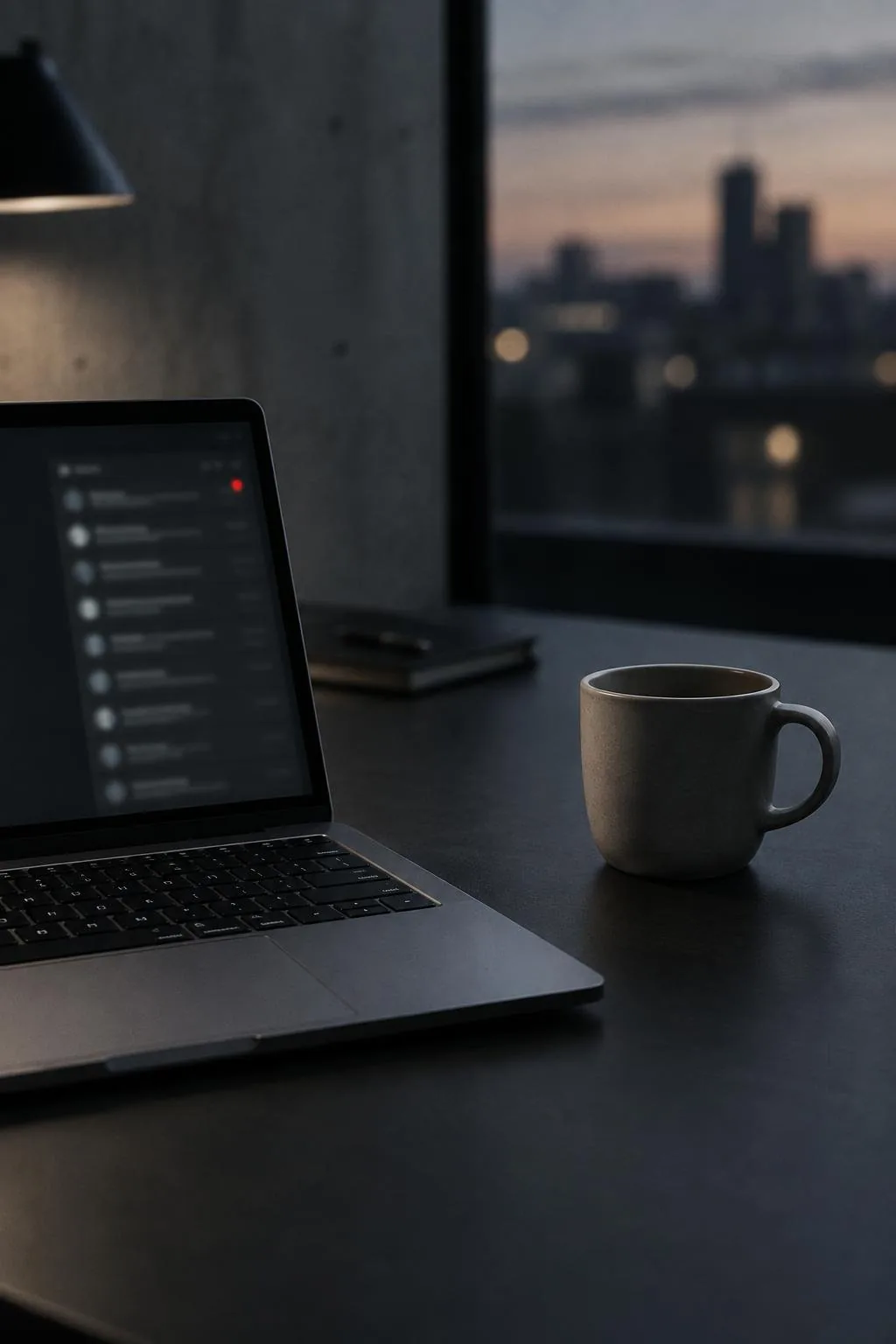
A laptop showing an unanswered web form notificationL-02

The lead

A form sits unanswered while the buyer is still deciding.

A web form or message comes in while the buyer is still comparing options. If the reply takes a day, someone else may already have answered. The audit looks at how an enquiry can reach you, how it is acknowledged and how quickly it is followed up.

A quote document left on a desk under a coffee mugL-03

The quote

Sent, then silence.

A quote goes out, then nobody follows up because the next job is more urgent. It sits in an inbox or on a desk with no date to check back. The audit looks at how open quotes are tracked and who chases them.

An empty salon chair in a quiet appointment hourL-04

The slot

A cancellation leaves an empty hour.

A cancellation or no-show leaves a gap in the schedule that stays empty by default. The people who would take it are often already on a waitlist or in your customer list. The audit looks at what happens when a slot opens.

A customer card file with one card slipping out of the drawerL-05

The customer

Quietly stops coming back.

Customers can drift away without a complaint, and nothing prompts anyone to check in. A short, well-timed reminder may bring some of them back. The audit looks at how you find and reach customers who haven’t returned.

A stack of overdue invoices with a red stampL-06

The invoice

Overdue, and awkward to chase.

Chasing money feels awkward, so it gets left until it is very late. Each invoice then depends on someone remembering. The audit looks at how overdue invoices are followed up, and by whom.

A mail tray overflowing with unopened envelopesL-07

The inbox

Questions pile up. Answers are slow.

The same questions keep arriving: hours, prices, availability. Answers wait until someone has time. The audit looks at which questions take longest and whether the answers already exist somewhere.

A hand-written weekly tally on a paper pad beside a calculatorL-08

The report

Weekly admin, done by hand when someone has time.

Weekly numbers get put together by hand, late in the week, if at all. Without them it is hard to tell what is working. The audit looks at which reports and admin tasks are still manual.

What we build

Systems that answer, route and keep the work moving.

ACQUIRE

Answer, qualify, book.

  • Answers, checks the live calendar, books and texts back missed calls.
  • Audit engineIn testing
    Finds the gaps from public evidence and scores them.
A headset and appointment book on a reception desk
CONVERT

Triage and route.

  • Safety calls first, then everything else. Built for HVAC. Demo on request.
  • Waitlist refillIn testing
    Offers a cancelled slot to the next person in line.
A dispatch board with job tickets pinned in rows
GROW

Keep the work moving.

  • Support assistantIn testing
    Answers from an approved knowledge base. Hands off the rest to a person.
  • Store operationsIn testing
    Support emails matched to orders and drafted for review. Low-stock alerts.
  • Content pipelinesIn testing
    Research, draft and schedule, with a person approving.
Neatly labelled shelves of stock in a small shop back room
Proof

Don’t take our word for it. Call it.

Ava / salon front deskLive demo
(289) 275-7217

Ask to book a haircut. She checks the demo salon’s live calendar and books on the call. A demo line running a demo salon, not a customer’s business.

An HVAC technician’s tools and a furnace panel in low light
Casey / HVAC dispatch

Hear it on request.

Casey separates safety calls from routine ones before any booking. No public line yet, so we run the demo with you.

Ask for the Casey demo

We’re early, and we say so. Everything marked “Live demo” is real system output from our own demo lines. Customer results will appear here only when a customer has agreed and we can show how it was measured.

The audit

A free report on where you’re leaking.

  1. Tell us the business. Name, website and what matters most.
  2. We write the report. Every finding is labelled fact, assumption or unclear. Nothing is guessed.
  3. You decide. Keep it. If you want help fixing what it finds, call, text or email us and we’ll book a time to go through it in detail.

No cost. No obligation. Fixes are scoped and quoted separately.

Revenue Leak Report / Example Co.Sample layout, fictional business
Where Example Co. may be leaking
After-hours enquiriesWebsite lists weekday hours only and shows no way to enquire outside them.Fact
Online bookingNo booking link found on the homepage or the pages we checked.Fact
Missed-call handlingSeveral reviews mention unanswered calls. Frequency isn’t known.Assumption
Quote follow-upNothing public to judge. We’d ask how open quotes are tracked today.Unclear
Overdue invoicesCan’t be seen from outside. Needs your input.Unclear
A real report also shows the reasoning behind each finding and what to fix first. It does not invent numbers.
How we work

Audit. Pilot. Install. Measure.

Audit

A free written report on where revenue may be leaking.

Pilot

One system on one problem, scoped in writing, with a starting point recorded.

Install

Built around your hours, tools and rules, with a person in the loop.

Measure

A regular report on what it handled, recovered and escalated.

The Eleven88 standard

Anything works in a demo. We build for the day something goes wrong.

So every system is designed around four states, not one.

01 / EXPECTED

Expected

The normal path completes correctly.

02 / REJECTED

Rejected

An invalid or unauthorized request is stopped.

03 / DEGRADED

Degraded

A dependency fails; the system falls back safely, or says so.

04 / ESCALATED

Escalated

It reaches the edge of its authority and hands over to a person.

How we build
  • Dry-run first. Nothing is sent, posted or charged until we’ve seen what it would do.
  • Spending caps and rate limits are set before a system can run.
  • A person approves before anything is published or sent for you.
  • If it doesn’t know, it says so or hands off. It does not guess.
  • Every action is logged, so we can see what happened and why.
  • A written list of what each system can do, cannot do, and must escalate.
RELEASE REPORT / SYSTEM_NAMESample layout, not results
Expected pathsxx / xx
Invalid inputsxx / xx
Duplicate protectionxx / xx
Dependency failuresxx / xx
Escalation pathsxx / xx
Known limitationslisted
Each real release report lists the tests run and what the system cannot do. The figures above are placeholders.
What we measure

Business events. Not tokens.

Calls answeredOpportunities capturedAppointments createdCancellations refilledQuotes reopenedCustomers reactivatedExceptions escalated

Where the data allows, we report what a system did and what it’s worth. Where we can’t measure something, the report says that too.

Fit

Who this is for, and who it isn’t.

Built for

  • Owner-run businesses where one missed opportunity mattersSalons and spas, clinics, home services and trades, local professional services.
  • Teams with demand who want fewer things falling through
  • Owners who want to see what changed, in numbers they can check
  • Online stores with support, order and inventory work piling up

Probably not a fit

  • You want a chatbot for its own sake
  • There’s little repeat demand to catch yetMarketing is probably the better first step.
  • You need a guarantee on revenueWe can’t promise one. Nobody can honestly promise your market.
Questions

Plain answers.

What can I automate in my small business?
Work that repeats and follows a clear rule: reminders, follow-up, sorting an inbox, drafting quotes for approval, screening enquiries. Anything with a safety, legal or clinical consequence stays with a person. See how we map it first.
What are some examples of business automation?
Reminders and follow-up messages, reading and sorting an inbox, drafting quotes or invoices for a person to approve, answering questions from your own documents, and answering the phone. These are examples of the pattern, not client results.
What does an automation agency actually do?
We map how your work really runs, find where revenue leaks, cut the steps that don’t earn their place, then build and test the systems that close the gap and report what they did. More about us.
Is this AI?
Some of it. The decisions (what to do, when to stop, when to hand off) are rules we write and test. AI is used where language is involved, like answering, drafting and classifying, inside limits on what it’s allowed to do. Any system that talks to your customers says it’s automated.
Will it replace my staff?
It takes the repetitive first step. A person stays in the loop for anything outside its authority, and you decide where that line is.
What if it gets something wrong?
Every system has a written list of what it can and cannot do, and an escalation path to a person. When it doesn’t know, it says so or hands off instead of guessing. Everything is logged so we can see what happened.
What does the audit involve?
You tell us the business and the website. We review what’s publicly visible plus anything you choose to share, and send a written report. Each finding is labelled fact, assumption or unclear. It’s free and you keep the report.
What does fixing it cost?
The audit is free. Fixes are scoped and quoted after we’ve gone through the report with you. We don’t publish a price list because the work depends on your tools and processes.
Do you guarantee results?
No. We can’t promise revenue, because we don’t control your market. What we do is define the scope in writing, record a starting point, and report on what the system did.
Why not just use my CRM’s built-in AI?
If it covers your leak, use it, and the audit will say so. We build for the gaps tools don’t cover on their own: follow-up across systems, quotes, collections, and measuring what actually happened.
What about my customers’ data and consent?
Before anything is installed we tell you which tools and data each system touches. Any system that contacts customers is designed around consent, identification and opt-out, and we go through it with you before it goes live. See our privacy page.
Start

Start with the leak.

You don’t need to know what should be automated. Tell us about your business and we’ll show you where opportunities are getting stuck.

“Live demo” means a demo line we run ourselves. Sample reports are layouts, not results.

Find the leaks